
Regulations have been published which, from 1 October 2021, will change the current restrictions on the use of winding up petitions (the regulations). A link to the regulations can be found here.
In summary, the regulations partially lift the temporary restriction on the use of winding up petitions imposed by the Corporate Insolvency and Governance Act 2020 and provide that:
COVID has tested the resilience of the construction industry over the past 18 months: temporary site closures; working restrictions; price increases and material shortages, to name but a few. Those challenges have brought cashflow pressures to bear. Is the next storm to be weathered that of solvency? It certainly seems ever more acute in these unprecedented times.
The consequent distress in the market is evident with 9 supplier insolvencies in the last few weeks alone, including Avro Energy, Utility Point and People’s Energy.
Today, 1 October 2021, is important as Ofgem is due to increase tariff caps from that date. This is also the date when the restrictions on petitioning for the winding up of companies on the basis of insolvency will be eased.
Legal landscape – energy regulations
In distressed situations, there are a number of issues to navigate, including:
The Section
On 29 September 2021, the English High Court rejected a challenge in respect of Caff Nero's company voluntary arrangement ("CVA"), brought by a landlord on the grounds of material irregularity and unfair prejudice. The single disgruntled landlord, with the backing of the EG Group ("EG") (who were interested in acquiring Caff Nero), argued that the directors of the company and the CVA nominees breached their respective duties in refusing to adjourn or postpone the electronic voting process to vote on the CVA, after EG had submitted an eleventh-hour offer for Caff Nero.
In brief
"All happy families are alike, each unhappy family is unhappy in its own way. With apologies to Tolstoy, the Akhmedov family is one of the unhappiest ever to have appeared in my courtroom." – Mrs. Justice Knowles
Voluntary administration is Australia’s primary business rescue regime. This article is Part 2 of a two-part series. In this article, we highlight the impact of voluntary administration on various stakeholders and the potential outcomes for a company in voluntary administration. It is not intended to be used as an exhaustive guide to Australia’s voluntary administration regime and its many nuances.
As the public may be aware, there are ways to put a company into liquidation, one of which is what is called “soft-touch” liquidation. The definition of the soft-touch liquidation was set out in a British Virgin Islands judgment — Re Constellation Overseas Ltd BVIHC (Com) 2018/0206, 0207, 0208, 0210 & 0212. It was held that the essence of a soft-touch provisional liquidation is that a company remains under the day- to-day control of the directors but is protected against actions by individual creditors.
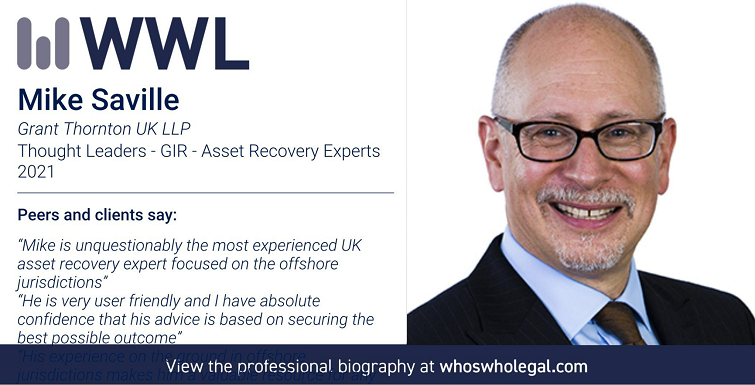
“Mike is unquestionably the most experienced UK asset recovery expert focused on the offshore jurisdictions” “He is very user friendly and I have absolute confidence that his advice is based on securing the best possible outcome” “His experience on the ground in offshore jurisdictions makes him a valuable resource for any international asset recovery effort”
Questions & Answers
High Court sanctions scheme of arrangement proposed by the Provident Finance group